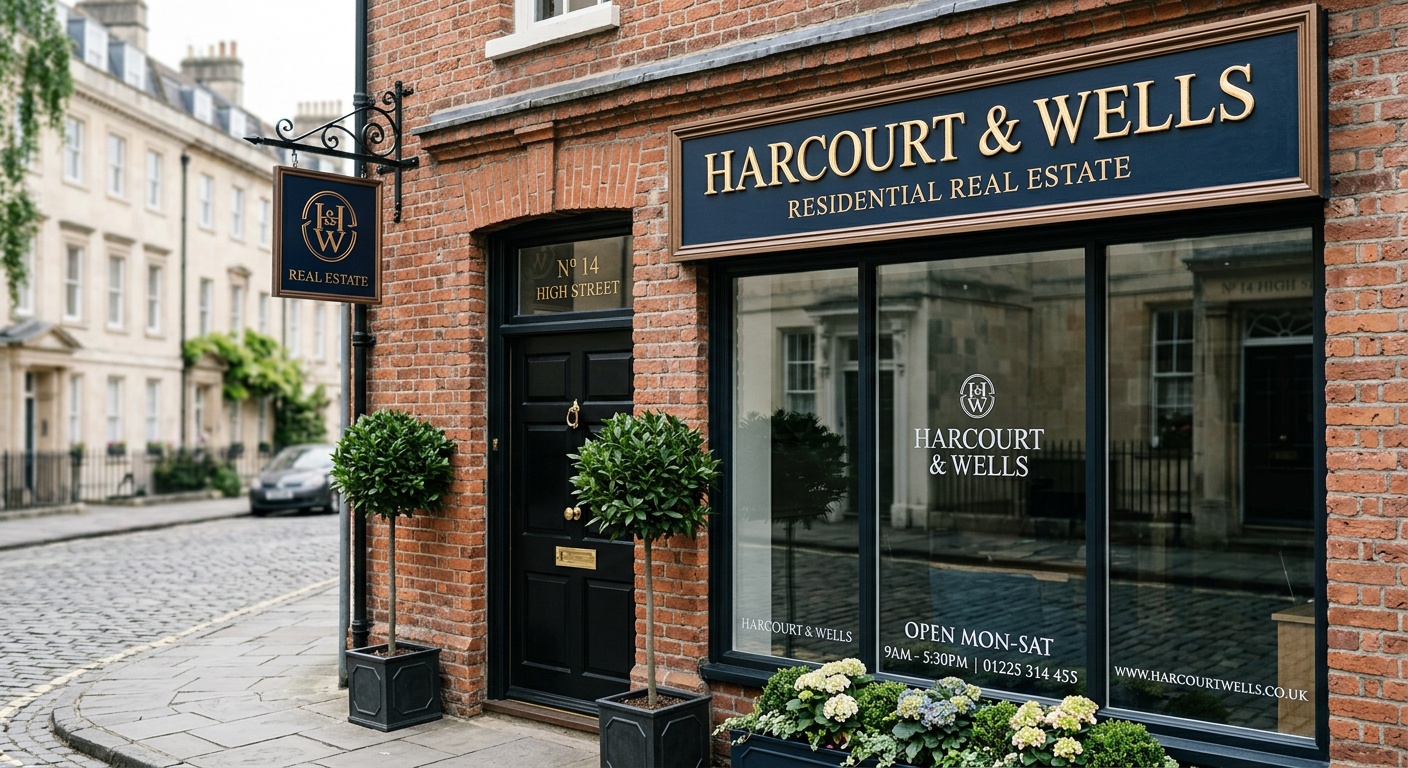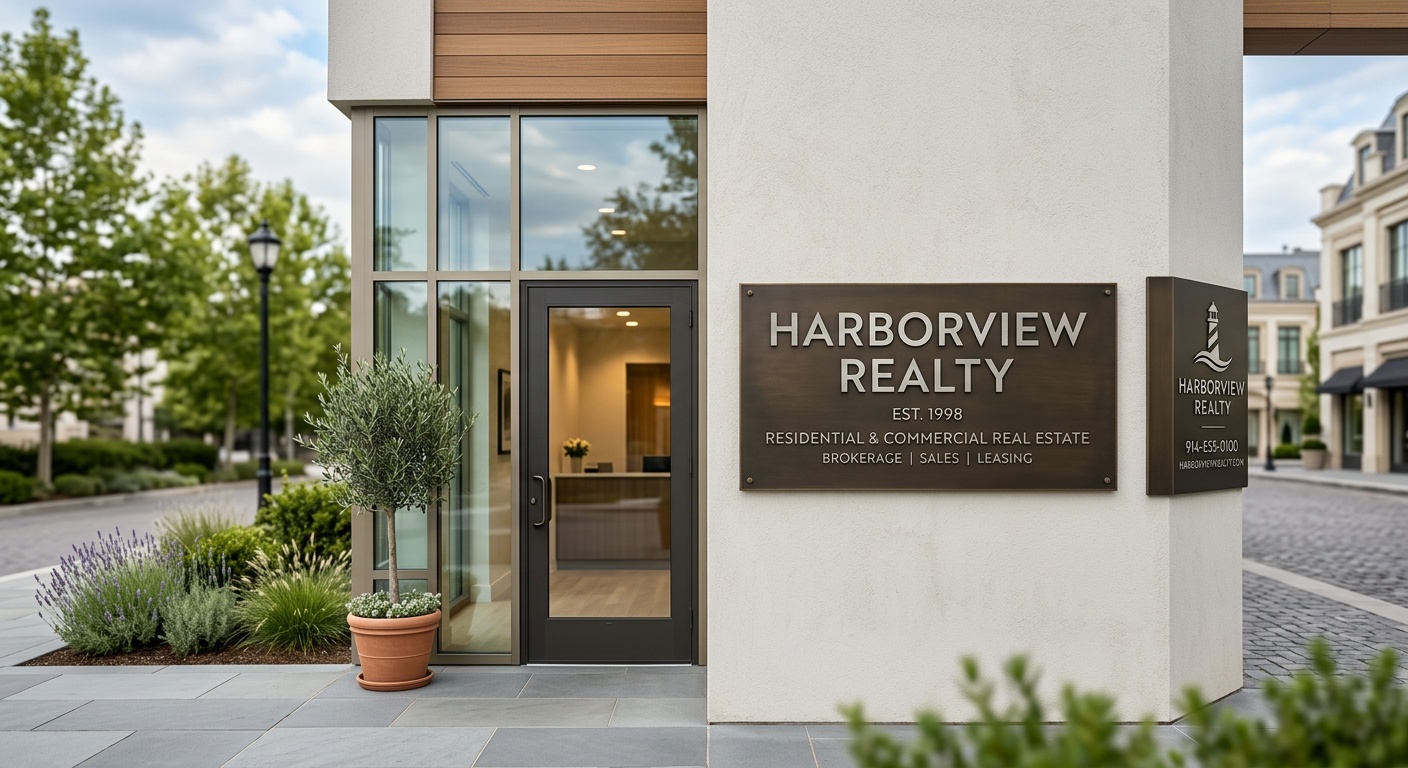
Big Digital Marketing Agencies vs. Boutique Real Estate Specialists: Which One Actually Grows Your Business?
Reading time: 9 minutes
You’re staring at two proposals on your desk. One’s from a national agency with a logo you recognize from billboards. The other is from a five-person shop that only works with real estate brokerages. Both promise leads. Both quote impressive numbers. So how do you actually choose?
This decision trips up more brokers, agents, and property developers than almost any other marketing choice in 2026. Get it wrong, and you’ve burned six figures on generic campaigns that don’t understand your local MLS quirks. Get it right, and you’ve found a partner who actually moves your listings.
Table of Contents
- The Real Difference Between Big Agencies and Boutique Specialists
- What the 2026 Data Actually Shows
- Case Study: Two Brokerages, Two Very Different Outcomes
- Common Challenges (and How to Solve Them)
- Comparison Table: Metrics That Matter
- Your Decision Framework
- FAQs
The Real Difference Between Big Agencies and Boutique Specialists
Well, here’s the straight talk: neither option is inherently better. The real question is whether you need marketing infrastructure or marketing intelligence.
Big digital marketing agencies—think the Ogilvy-adjacent, multi-vertical shops managing everything from SaaS launches to fast-food campaigns—bring scale. They have in-house video production, programmatic ad buyers, and enterprise-level reporting dashboards. What they often lack is a granular understanding of how a buyer behaves differently when shopping for a $1.2 million coastal property versus a downtown condo conversion.
Boutique real estate specialists, on the other hand, live and breathe property marketing. They know that a listing video needs to hit key search intent within the first three seconds, that Zillow and Realtor.com syndication timing affects organic visibility, and that hyperlocal SEO (think “homes near Overland Park top-rated schools” rather than generic “homes for sale”) converts at a dramatically higher rate.
Why Scale Isn’t Always an Advantage
Quick scenario: Imagine you’re a boutique brokerage in Austin, Texas, competing against national franchises with seven-figure marketing budgets. A big agency might build you a beautiful brand campaign—but if it doesn’t account for hyperlocal search behavior or the specific compliance rules around Fair Housing advertising, you’re paying for reach that never converts.
According to the National Association of Realtors’ 2025 Technology Survey, 76% of buyers still start their home search online, but 89% of agents say hyperlocal content outperforms broad brand messaging in generating qualified leads. That’s not a small gap—it’s the entire argument for specialization.
Why Boutique Isn’t Automatically Better
That said, boutique agencies have their own blind spots. Many lack the technical resources for advanced marketing automation, multi-channel attribution modeling, or the paid media budgets needed to compete at scale in dense metro markets. A five-person shop might know real estate cold but struggle to execute a coordinated campaign across Google, Meta, TikTok, and connected TV simultaneously.
The honest answer? Real estate marketing success in 2026 depends less on agency size and more on whether the team understands your specific market segment—luxury, commercial, multifamily, or first-time buyer—combined with genuine technical execution capability.
What the 2026 Data Actually Shows
Real estate marketing spend has shifted noticeably. Industry benchmarking from Inman’s 2026 Marketing Trends Report shows brokerages are now allocating roughly 34% of their digital budget to video and short-form content, up from just 19% in 2023. Boutique specialists have generally adapted faster here, since they’re not retrofitting legacy campaign templates built for other industries.
Meanwhile, big agencies still dominate in programmatic advertising efficiency. Their scale allows for better negotiated ad rates—often 15-20% lower cost-per-click on competitive real estate keywords—simply because of aggregated ad spend across multiple clients.
Data synthesized from 2026 industry benchmarking reports on brokerage marketing performance. Lead quality reflects percentage of leads reaching qualified showing/offer stage.
Case Study: Two Brokerages, Two Very Different Outcomes
Consider two mid-sized brokerages, both operating in the Phoenix metro area with similar listing volumes in early 2025.
Brokerage A signed with a large national digital agency, drawn in by an impressive pitch deck and celebrity-adjacent case studies from unrelated industries. Over eight months, they spent $180,000 on a campaign that generated strong impression numbers but a disappointing 1.3% lead-to-close conversion rate. The agency’s account team rotated three times, and each new manager had to relearn the brokerage’s niche in luxury desert-view properties.
Brokerage B, a similarly sized firm just 20 minutes away, partnered with a boutique agency specializing exclusively in Southwest residential real estate. Their budget was smaller—$95,000 over the same period—but they saw a 4.1% conversion rate, driven largely by hyperlocal SEO content, neighborhood-specific video tours, and retargeting campaigns built around actual buyer search behavior in that market.
Chad Ferris, a broker-owner quoted in a 2026 RISMedia feature on marketing ROI, put it bluntly: “We didn’t need more eyeballs. We needed the right eyeballs. The boutique team understood that a buyer searching for ‘gated golf community Scottsdale’ has completely different intent than someone searching ‘Scottsdale homes for sale.'”
The Hybrid Model Emerging in 2026
Interestingly, a growing number of larger brokerages are now adopting a hybrid approach—retaining a big agency for brand awareness and programmatic media buying while contracting a boutique specialist for content strategy, listing-specific campaigns, and local SEO. This isn’t just a compromise; it’s becoming a legitimate strategic model, with roughly 28% of top-100 brokerages reporting this dual-vendor structure in a recent T3 Sixty industry survey.
Common Challenges (and How to Solve Them)
Challenge 1: Communication gaps and slow turnaround. Big agencies often route requests through account managers, creative directors, and approval chains before anything ships. Solution: negotiate a dedicated point of contact clause in your contract and request weekly check-ins rather than monthly reports.
Challenge 2: Boutique agencies hitting capacity limits. A specialist team of five can only execute so much simultaneously, especially during peak listing seasons like spring 2026. Solution: ask upfront about client load and whether they use overflow contractors or automation tools to handle volume spikes.
Challenge 3: Misaligned reporting metrics. Many agencies—big or boutique—report on vanity metrics like impressions and clicks rather than closed transactions. Solution: insist on a reporting structure tied to cost-per-qualified-lead and, ideally, cost-per-closed-deal, even if that number takes longer to calculate.
Comparison Table: Metrics That Matter
| Metric | Big Digital Agency | Boutique Specialist |
|---|---|---|
| Average Monthly Retainer (2026) | $8,000–$25,000 | $3,000–$10,000 |
| Real Estate-Specific Expertise | Varies widely by team | Consistently deep |
| Average Lead-to-Close Rate | 1.2%–2.5% | 3%–5% |
| Response/Turnaround Time | 3–7 business days | 1–2 business days |
| Scalability for Multi-Market Expansion | High | Moderate to Low |
Your Decision Framework
Practical Roadmap:
- Audit your actual need. Are you launching a brand in a new market (favor big agency scale) or trying to squeeze more conversions from existing local traffic (favor boutique depth)?
- Request real estate-specific case studies. Not “we grew traffic by 200%”—ask for closed-transaction data tied to campaigns.
- Test before committing long-term. Negotiate a 90-day trial period with clear KPIs before signing a 12-month retainer.
- Evaluate the account team, not the brand name. Ask specifically who will manage your account daily and what their real estate background looks like.
- Consider the hybrid model. If budget allows, pairing broad-reach media buying with specialist content execution often outperforms either option alone.
Pro Tip
The right partnership isn’t just about avoiding wasted ad spend—it’s about building a marketing engine that compounds over time, where every campaign teaches you more about your specific buyer pool.
Frequently Asked Questions
Is a boutique real estate marketing agency always cheaper than a big digital agency?
Generally, yes, on a monthly retainer basis—boutique specialists typically charge 40-60% less. However, cost-per-qualified-lead can sometimes be lower with big agencies if they’re running highly optimized programmatic campaigns at scale, so always compare cost-per-outcome, not just monthly fees.
Can I use both a big agency and a boutique specialist at the same time?
Absolutely, and it’s increasingly common in 2026. Many brokerages assign brand awareness, paid media buying, and multi-market campaigns to a larger agency while keeping a boutique specialist for hyperlocal SEO, listing content, and neighborhood-specific campaigns.
What questions should I ask before signing a contract with either type of agency?
Ask about their reporting cadence, whether they’ve worked with your specific property type (luxury, commercial, multifamily), their average client tenure, and whether they can provide closed-transaction data rather than just traffic or impression metrics.
Turning This Decision Into Your Competitive Advantage
The agencies winning real estate clients in 2026 aren’t necessarily the biggest or the most niche—they’re the ones who treat your brokerage like a genuine partner rather than another line item. As AI-driven search and hyperlocal discovery tools continue reshaping how buyers find properties, the gap between generic marketing and specialized execution will only widen.
So here’s your next move: pull up your last three marketing invoices, calculate your actual cost-per-closed-deal, and ask yourself honestly whether your current partner—big or boutique—has earned the right to keep your business. What would change if you demanded transaction-level accountability instead of vanity metrics?