Creating a Social Media Marketing Plan Template for Real Estate Brands in 2026
Reading time: 9 minutes
Ever posted a gorgeous listing photo, waited for the likes to roll in, and… crickets? You’re not alone. In 2026, real estate agents are competing against AI-generated content, hyper-local influencers, and algorithm changes that seem to shift every quarter. A scattered posting habit isn’t a strategy—it’s a hope. Let’s build a template that actually converts scrollers into showings.
Table of Contents
- Why Real Estate Brands Need a Structured Plan
- The Core Components of Your Template
- Platform-Specific Strategy Breakdown
- Content Pillars That Actually Sell Homes
- Measuring What Matters
- Common Challenges and How to Solve Them
- FAQs
- Your Roadmap Forward
Why Real Estate Brands Need a Structured Plan
Here’s the straight talk: posting randomly isn’t marketing—it’s digital noise. According to the National Association of Realtors’ 2025 Member Technology Survey, 79% of agents say social media generates their highest-quality leads, yet fewer than a third have a documented content calendar. That gap is where opportunity lives.
Quick Scenario: Imagine two agents in the same suburb. Agent A posts listing photos whenever a new property hits the market. Agent B follows a weekly content rhythm—market updates on Monday, neighborhood spotlights on Wednesday, client testimonials on Friday. By month three, Agent B has a warmer pipeline because prospects have “met” her personality a dozen times before ever calling.
A social media marketing plan template solves three problems at once: it removes decision fatigue, keeps branding consistent across platforms, and gives you a measurable framework instead of guesswork.
The Core Components of Your Template
Every effective real estate social template should include the following building blocks. Think of this as your skeleton—flesh it out with your market’s personality.
1. Brand Voice and Visual Identity Guide
Before scheduling a single post, define your tone (professional-warm, luxury-aspirational, or approachable-local expert), color palette, and photo style. Buyers scrolling Instagram in 2026 expect cohesive branding—mismatched filters and fonts scream “amateur.”
2. Audience Segmentation
Are you targeting first-time buyers, luxury investors, or relocating professionals? Each segment consumes content differently. First-time buyers favor educational Reels; investors respond to data-driven carousel posts on ROI and rental yields.
3. Content Calendar Framework
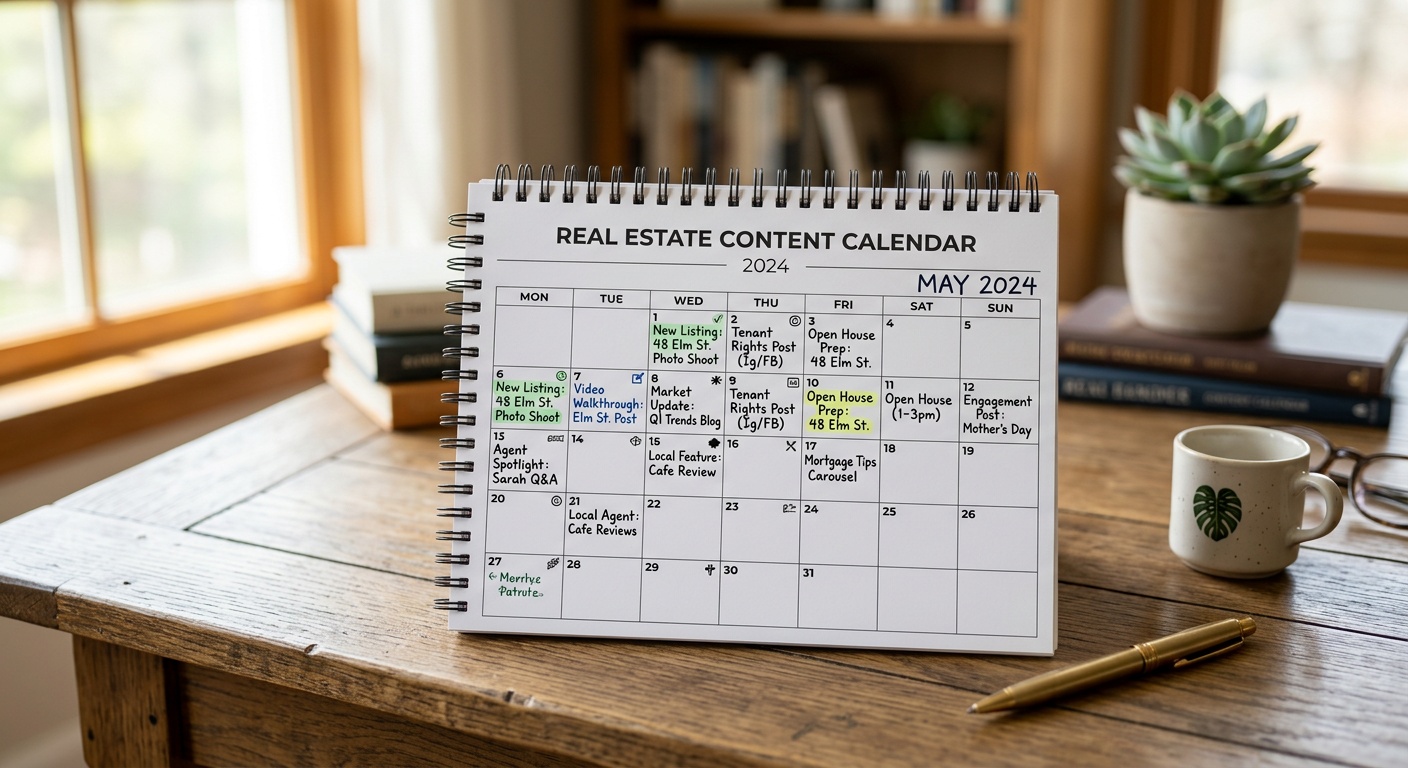
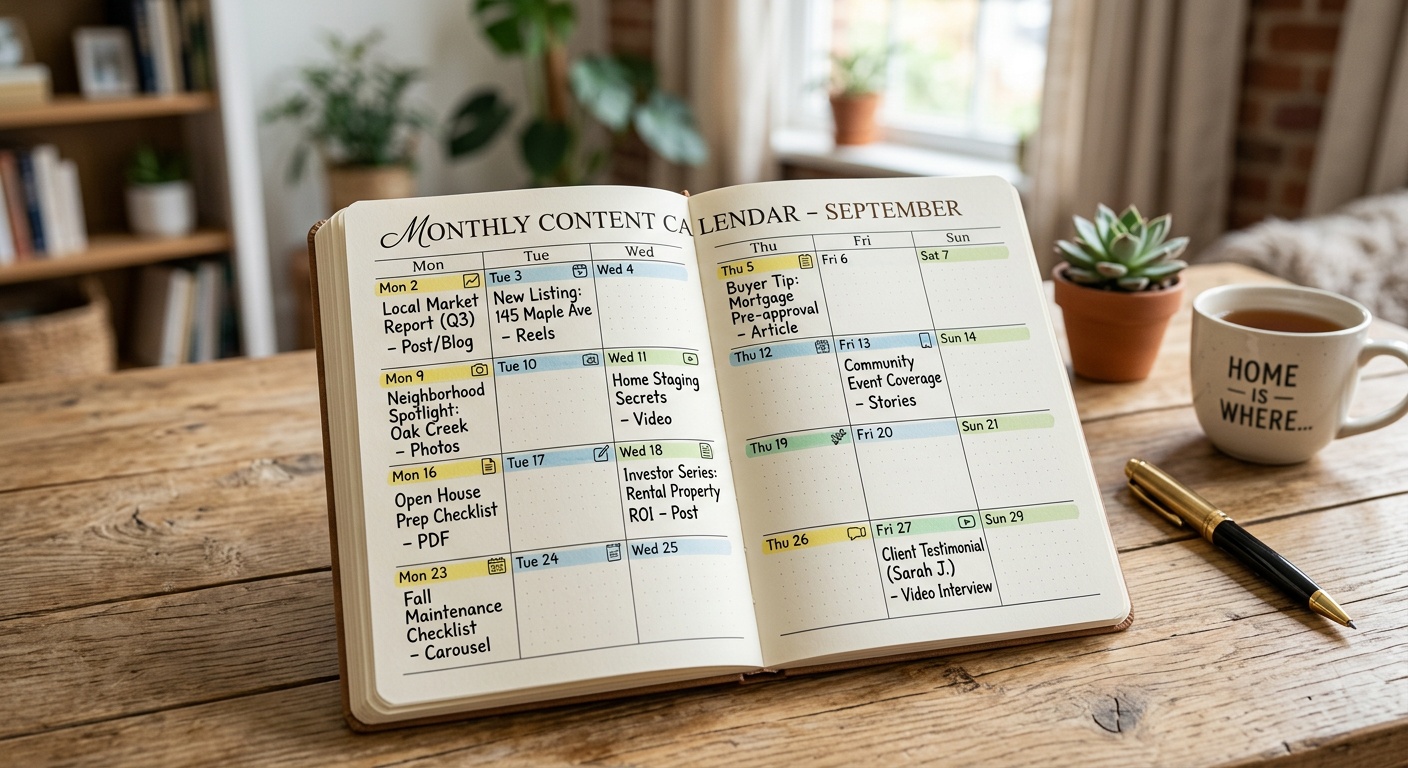
Map out a repeatable weekly or monthly cadence. Most successful brokerages in 2026 use a “3-2-1 rule”: three educational posts, two property/community highlights, and one personal or behind-the-scenes piece per week.
Platform-Specific Strategy Breakdown
Not every platform deserves equal effort. Allocate resources based on where your buyers actually spend time.
Instagram and TikTok: Visual Storytelling
Short-form video still dominates. Listing walkthroughs under 60 seconds, “day in the life of an agent” clips, and neighborhood guides perform exceptionally well. Data from Later’s 2026 Social Media Trends Report shows real estate Reels average 34% higher engagement than static posts.
Facebook: Community and Local SEO
Facebook Groups remain gold for hyper-local engagement—think “Best Coffee Shops Near [Neighborhood]” or community Q&A threads. Facebook Marketplace integration also drives listing visibility among local buyers who aren’t actively “house hunting” but browsing casually.
LinkedIn: Building Authority for Commercial and Luxury Segments
For agents specializing in commercial or luxury residential, LinkedIn thought-leadership posts—market forecasts, investment analysis—build credibility with higher-net-worth clients who rarely engage on TikTok.
Content Pillars That Actually Sell Homes
Pro Tip: The right content mix isn’t about volume—it’s about variety that mirrors the buyer’s journey.
- Educational: Mortgage rate breakdowns, closing cost explainers, first-time buyer checklists.
- Aspirational: Lifestyle-driven listing tours, “imagine waking up here” storytelling.
- Social Proof: Client testimonials, closing day photos, before/after renovation reveals.
- Local Authority: Market trend reports, school district spotlights, event roundups.
- Personal Brand: Behind-the-scenes negotiation stories, humor, and relatable moments.
Measuring What Matters
Vanity metrics feel good but rarely pay commissions. Focus on the numbers tied to lead generation and conversion.
| Metric | Why It Matters | Benchmark (2026) |
|---|---|---|
| Engagement Rate | Signals content resonance | 3–6% (Instagram) |
| DM Inquiries per Post | Direct lead indicator | 2–5 per listing post |
| Video Completion Rate | Content quality gauge | 45%+ for Reels/TikTok |
| Click-Through to Listing Page | Bridges social to conversion | 1.5–3% |
| Lead-to-Showing Rate | Ultimate ROI metric | 10–15% |
Platform Effort Allocation (Visualized)
Here’s a simple breakdown of where a typical mid-size brokerage should allocate weekly content creation effort in 2026:
Common Challenges and How to Solve Them
Challenge 1: Inconsistent Posting Due to Time Constraints
Most agents aren’t marketers—they’re deal-closers with fifteen minutes to spare between showings. The fix? Batch-create a month’s worth of content in a single two-hour session using tools like CapCut and Canva’s real estate templates, then schedule everything through a platform like Later or Meta Business Suite.
Challenge 2: Generic Content That Blends Into the Feed
A brokerage in Austin, Texas faced this exact issue in early 2025—their listing posts looked identical to fifty competitors’. After shifting to personality-driven video (agents sharing candid neighborhood opinions and negotiation war stories), their follower growth jumped 62% within four months, according to their internal Q3 2025 marketing report.
Challenge 3: Proving ROI to Brokerage Leadership
Track UTM-tagged links from every bio and post to your CRM. When one Denver team implemented UTM tracking in late 2025, they discovered that 22% of closed deals in Q1 2026 originated from a single Instagram Reels series—data that secured a bigger marketing budget for the following quarter.
FAQs
How often should real estate brands post on social media in 2026?
Most successful agents post 4–6 times weekly across primary platforms, supplemented by daily Stories. Consistency matters more than volume—three well-crafted weekly posts outperform seven rushed ones.
Which platform delivers the best ROI for real estate marketing right now?
Instagram and TikTok currently generate the strongest engagement-to-lead ratio for residential agents, while LinkedIn performs best for commercial and luxury segments targeting higher-net-worth audiences.
Do I need a professional videographer for social content?
Not necessarily. Smartphone footage shot with good lighting and a stabilizer often performs comparably to professional video for everyday content. Reserve professional crews for flagship listings or brand launch campaigns.
Your Roadmap Forward
Social media for real estate has evolved from “nice to have” into a core lead-generation engine, and by 2027 the brands treating their content calendar like a business asset—not an afterthought—will dominate local search visibility and referral pipelines. The template isn’t about rigid rules; it’s about giving yourself permission to show up consistently without reinventing the wheel every week.
Here’s your immediate action plan:
- Week 1: Audit your last 20 posts against the content pillars above—identify the gaps.
- Week 2: Build a 30-day calendar using the 3-2-1 posting rule.
- Week 3: Set up UTM tracking on every bio link and listing post.
- Week 4: Review engagement and DM-inquiry data, then adjust your pillar mix accordingly.
So, what’s stopping you from turning your next listing post into your next closed deal? The template is only as powerful as the consistency behind it—start small, measure honestly, and let the data guide your next move.